Do Gut Health Supplements Help With Constipation?
Quick Answer: Do Gut Health Supplements Help With Constipation?
Often yes — and sometimes they make things briefly worse before they get better. Fermentable fibres such as chicory inulin and resistant starch hold water in the colon and feed the bacteria that keep stool soft, and trials of inulin-type fibres generally report modest improvements in how often people go. The catch is that a full dose added on day one, swallowed with a mouthful of coffee and no extra water, is the most common way a perfectly reasonable supplement gets blamed for a bad week.
- Fluid first. Fibre without water is the single most common reason a fibre supplement backfires.
- Ramp slowly. Every other day for the first week is standard practice, not being precious.
- Wait two to four weeks before deciding. Stool frequency changes on a bacterial timescale, not an overnight one.
What counts as constipation, in plain terms
Clinicians usually mean something more specific than “I have not been today.” The working picture is fewer than three bowel movements in a week, stools that are hard or lumpy, straining on a good proportion of trips, a feeling that you have not finished, or needing to help things along physically. You do not need all of those. Two of them, most weeks, for a few months, is the pattern that gets called chronic.
That definition matters here because it tells you what a supplement is being asked to change. Frequency and consistency are the two levers. Frequency is largely about transit time — how long material takes to travel the colon. Consistency is largely about water. A fibre works on one, the other, or both, depending on which fibre it is, and most of the confusion in this area comes from treating “fibre” as one substance when it is really a category of dozens with very different behaviour.
Why a fibre supplement can back you up before it helps
Fermentable fibre is food for bacteria. When you introduce a new substrate, the populations that can eat it expand over days and weeks, and while that is happening you get gas as a by-product. Gas causes pressure, pressure causes discomfort, and discomfort makes people tense up rather than relax — which is precisely the wrong reflex if things are already slow. So the first week can genuinely feel like a step backwards even when the trajectory is right.
There is a second mechanism, and it is the one people miss. Fibre works partly by holding water in the stool. If there is no spare water in the system, a fibre that is meant to soften can instead sit there as extra dry bulk. That is not a defect in the product. That is a defect in the glass of water that never happened. It is also why almost every fibre label, including the SlimTide label, tells you to take the capsule with a full 8 oz glass of water rather than a sip.
A fibre supplement is a tool for changing the environment in your colon over weeks. If you need something to work tonight, fibre is the wrong tool and a pharmacist is the right conversation.
The water rule almost nobody follows
Here is the practical version. Take the capsule with a genuinely full glass of water, not with the last inch of your coffee. Then drink normally across the day — you do not need to force litres, but you do need to not be running dry. If your urine is consistently dark, adding fermentable fibre on top of that is a plan with a predictable ending.
Fluid is also the reason the same product produces opposite reports from two people. Somebody who drinks two litres a day and adds inulin gets softer, more frequent stools. Somebody who drinks three coffees and nothing else adds inulin and gets bloating and a harder time. Same capsule, same dose, different environment. When people ask which is the best gut health supplement for constipation, the honest answer is that the fluid habit around the supplement predicts more of the outcome than the brand on the bottle does.

So do gut health supplements help with constipation? It depends which fibre
This is where the category label stops being useful. Psyllium, wheat bran, inulin and resistant starch are all “fibre” and they behave in almost entirely different ways. Psyllium forms a viscous gel and holds onto water through the whole colon, which is why it has the deepest evidence base for chronic constipation specifically. Wheat bran is insoluble and adds mechanical bulk, which helps some people and irritates others. Inulin and resistant starch are fermented, which is great for feeding bacteria and much less direct as a stool softener.
| Option | How it works | Typical trial dose | Gas likelihood | Evidence for constipation |
|---|---|---|---|---|
| Psyllium husk | Viscous gel, holds water the length of the colon | 5–10 g/day | Low to moderate | Strongest of the fibres |
| Chicory inulin / FOS | Fermented; feeds bifidobacteria, draws some water | 10–20 g/day | High in week one | Modest and fairly consistent |
| Resistant starch | Fermented in the colon to short-chain fatty acids | 15–40 g/day | Moderate to high | Mixed; better studied for other endpoints |
| Wheat bran | Insoluble mechanical bulk, speeds transit | 10–20 g/day | Moderate | Helps some, worsens symptoms in others |
| Magnesium salts (osmotic) | Pulls water into the bowel osmotically | Per product label | Low | Reliable, but not a fibre — ask a clinician first |
| Stimulant laxatives | Triggers bowel contraction directly | Per product label | Low | Effective short term; not a daily habit to self-manage |
Read that table honestly and the ranking is uncomfortable for supplement marketing: if constipation is the only thing you want to change, plain psyllium has the better case. Fermentable prebiotics are playing a longer game — changing which bacteria are present, which is a different goal that happens to have stool consistency as one of its downstream effects.
Feeding the gut, not just adding bulk
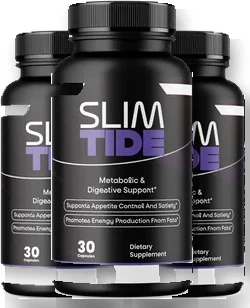
SlimTide pairs chicory root inulin and potato resistant starch with a three-strain probiotic blend in a once-daily capsule. If you are comparing prebiotic formulas or looking at where to buy weight loss supplements without wading through a dozen storefronts, the official page carries the current pricing and the full label.
A 14-day ramp that usually works
The point of a ramp is to let the bacterial population adjust at a speed your gut does not object to. Two weeks is enough for most people.
- Days 1–4: one capsule every other day, always with a full glass of water and always with food. Food slows the arrival of fermentable material into the colon, which blunts the gas.
- Days 5–10: one capsule daily at a fixed time. Keep the time fixed — you are trying to read a signal, and moving the variable makes that impossible.
- Days 11–14: hold the daily dose and add one deliberate food change: a portion of oats, beans, or cooked-and-cooled potato or rice. Cooling cooked starch increases its resistant starch content, which is a free version of what the capsule is doing in small amounts.
- Throughout: a ten-minute walk after your largest meal. Movement after eating is one of the few interventions here that costs nothing and has a mechanism nobody argues about.
If day five brings a lot of gas, do not escalate. Drop back to every other day for another four days and try again. Gas that settles over a fortnight is adaptation. Gas that is still escalating at week three is a signal that this particular fibre does not suit you, and there is no prize for pushing through it.

The levers that matter more than the capsule
It is worth being blunt about the hierarchy. Fluid comes first, and nothing else works properly without it. Total dietary fibre comes second — the commonly cited target is roughly 25 grams a day for women and 38 for men, and most adults land nearer 15, which is a gap no capsule closes. Movement comes third, particularly after meals. Routine comes fourth: the gut has a reflex that fires after eating, and consistently ignoring the urge because you are in a meeting trains it out over time.
A supplement sits fifth. That is not a dismissal — fifth on a list of five things that all matter is still worth doing — but it explains why someone who fixes only the fifth item often reports nothing. If you are shopping for the best fiber supplement for gut health and weight loss, the supplement will do more for you when the four items above it are not actively working against it.
Where a low-dose prebiotic formula like SlimTide fits
Being straight about the numbers: SlimTide declares 211 mg of chicory root inulin and 100 mg of potato resistant starch per capsule. That is roughly a third of a gram of fibre in total. Set against the 10 to 20 grams used in the inulin trials in the table above, it is a rounding error. Anyone telling you a third of a gram of fibre will bulk your stool is selling something.
What that dose can plausibly do is act as a seed — a small, consistent daily substrate aimed at the three strains in the same capsule, rather than a bulking agent aimed at your stool. Whether a seed dose is enough to shift a population is genuinely unsettled, and we would rather say that than pretend otherwise. If your goal is specifically to move your bowels more often, add fibre-rich food and fluid and treat the capsule as the part of the plan working on the microbial side. If your interest is the microbiome angle, the low dose is more defensible — and our piece on running a two-week bloating diary is the practical way to find out how your own gut responds to it.
What this cannot do
No dietary supplement diagnoses, treats, cures or prevents any disease, and constipation has causes that fibre cannot touch. Constipation driven by opioid medication, by an underactive thyroid, by iron or calcium supplements, by a pelvic floor that is not coordinating properly, or by a structural problem in the bowel will not resolve because you added a prebiotic. In slow-transit constipation specifically, adding bulk can make symptoms worse rather than better, which is the opposite of the intuitive move.
There are also signals that mean stop reading and make an appointment: blood in the stool, black or tarry stool, unexplained weight loss, constipation that starts suddenly after the age of 50 or that is new and persistent at any age, severe pain, vomiting, or no bowel movement at all for several days with a swollen abdomen. None of those are supplement territory. They are clinician territory, and the delay caused by trying one more capsule first is the actual risk.
Questions people actually ask
How long before a fibre supplement changes anything?
Give it two to four weeks of consistent daily use. Stool frequency and consistency respond slowly because the change is bacterial, not chemical. The first three to seven days are usually the noisiest and the least representative, so judging a fibre supplement on day four tells you almost nothing.
Should I take it in the morning or at night?
Either works, but pick one and keep it there for the whole trial. Morning with a full glass of water suits most people because it lines up with the natural post-breakfast urge to go. If a fibre supplement leaves you gassy in the evening, moving it to the morning is a reasonable first adjustment.
Is more fibre always better for constipation?
No. Above roughly 30 to 40 grams a day most people get more gas and no extra benefit, and for some people with a sluggish or slow-transit gut, piling on bulk makes things feel worse rather than better. Increase gradually and stop increasing at the point where things are working.
Can I take a fibre supplement alongside a laxative?
Often yes, but that is a question for a pharmacist or doctor rather than a website, because it depends on which laxative and why you are taking it. As a general rule, keep fibre and any medication separated by about two hours, since fibre can slow how quickly some drugs are absorbed.
References
- Mayo Clinic — Constipation: symptoms, causes and when to seek care
- Harvard T.H. Chan School of Public Health — Fiber: types, intake targets and food sources
- PubMed — randomised trials of inulin-type fructans and stool frequency
- PubMed — trial literature on psyllium and chronic constipation
- NIDDK (NIH) — definition, causes and treatment of constipation
General information, not medical advice. These statements have not been evaluated by the Food and Drug Administration, and no dietary supplement is intended to diagnose, treat, cure or prevent any disease. Speak to a qualified healthcare professional before changing what you take.
See the Official SlimTide Store
Affiliate link. Slimtaide Review Desk earns a commission on purchases made through it, at no extra cost to you. We are not the manufacturer.