Gut Health Supplements After Antibiotics: Rebuilding Your Routine
Quick Answer: Are Gut Health Supplements After Antibiotics Worth Taking?
The best-supported use is preventive rather than restorative: specific probiotic strains, started alongside the antibiotic course rather than after it, have reasonable trial evidence for reducing antibiotic-associated diarrhoea. Evidence that any supplement speeds the return of your original bacterial community is much weaker, and one closely watched study found that a probiotic blend actually delayed that return compared with doing nothing. For rebuilding, varied plant fibre and fermented food are doing more of the work than a capsule is.
- Start early, not after. Trials generally begin on day one of the course, and continue two to four weeks past the last dose.
- Space it by two hours from the antibiotic itself, or the drug simply kills what you just swallowed.
- Recovery is measured in weeks to months for most healthy adults, not days — and repeated courses take longer.
What a course of antibiotics actually does down there
An antibiotic is not a guided missile. It is aimed at whatever is making you ill, but it reaches the colon too, where something in the order of a thousand bacterial species are doing ordinary daily work: fermenting fibre into short-chain fatty acids, competing with opportunists for space and nutrients, and maintaining the mucus layer that separates the community from your gut wall. Broad-spectrum drugs hit a wide slice of that, and the effect is measurable within a couple of days of the first dose.
Three things happen more or less at once. Overall diversity drops, sometimes sharply. Species that survive the drug expand into the space that has opened up, which is why an antibiotic course can leave you with a gut community that is not just smaller but differently shaped. And the loss of competition creates an opening for organisms that are normally kept in check — the mechanism behind the diarrhoea that follows perhaps one course in five, and behind the much rarer but far more serious Clostridioides difficile infection.
None of that is an argument against taking antibiotics. When one is genuinely indicated, the maths is not close. It is an argument for understanding what you are rebuilding and how long it takes, rather than expecting a fortnight of capsules to reset a thousand-species ecosystem.
How long the rebuild really takes
The published picture is more optimistic than the internet's, and less instant than the marketing's. Studies that sample stool repeatedly after a course generally find the community moving substantially back toward its previous composition over roughly one to two months in healthy adults. It is a curve, not a switch: the fastest recovery happens in the first weeks and then slows considerably.
Two honest complications sit alongside that. First, “substantially back” is not “identical”. Certain species are consistently slower to return, and in some people a few do not come back within the study window at all. Second, the averages hide enormous individual variation, and the things that push someone toward the slow end are fairly predictable: repeated courses, broad-spectrum rather than narrow drugs, older age, hospitalisation, and a low-fibre diet during and after.
That last one is the only variable on the list you fully control this week, which is a useful thing to notice before you spend anything.
Rebuilding a gut community after antibiotics is closer to replanting than refuelling. You are not topping up a tank; you are creating conditions in which a slow, competitive process can happen — and the main thing you supply is food, not organisms.
Do gut health supplements after antibiotics speed anything up?
Split the question in two, because the answers are different.
For preventing antibiotic-associated diarrhoea, the evidence is the strongest in this whole area. Pooled analyses of many randomised trials support a reduction in risk, with the bulk of the data resting on two specific organisms: the yeast Saccharomyces boulardii and the bacterium Lacticaseibacillus rhamnosus GG. Timing is part of the finding — benefit is clearest when the probiotic is started within a day or two of the antibiotic, not when it is started after the course ends.
For restoring your original community faster, the case is much shakier, and there is a genuinely awkward result worth knowing. In one carefully done study that sampled the gut wall directly rather than relying on stool, participants who took a multi-strain probiotic after antibiotics saw their native community return more slowly than participants who took nothing at all; an autologous transplant of their own pre-antibiotic stool restored it fastest. That is one study, its methods were unusual, and it should not be over-read. But it is a real published result that cuts against the intuitive story, and any page that mentions the benefits without mentioning that finding is selling rather than informing.
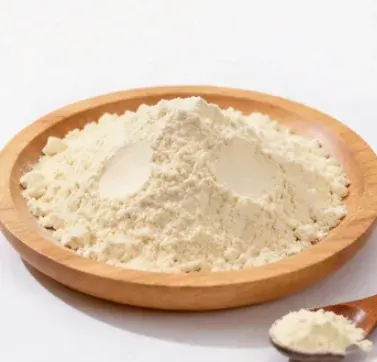
Adding a daily prebiotic and probiotic once the course is done
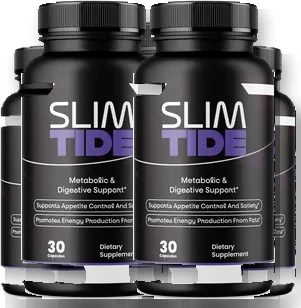
SlimTide is a single daily capsule pairing chicory root inulin and potato resistant starch with a three-strain blend, which suits the slow-and-steady phase rather than the acute one. If you are weighing up the best gut health supplement after antibiotics, or want to check the current price and full label before committing, that sits on the official page.
What the options actually offer
Ranked by what the published literature will support rather than by what is easiest to sell.
| Approach | What it aims to do | Typical amount studied | When | Evidence strength |
|---|---|---|---|---|
| Saccharomyces boulardii | Reduce antibiotic-associated diarrhoea | 250–1,000 mg daily in trials | From day one of the course | Reasonably strong for that endpoint |
| L. rhamnosus GG | Reduce antibiotic-associated diarrhoea | Billions of CFU daily | From day one of the course | Reasonably strong for that endpoint |
| Varied plant fibre | Feed the species trying to recolonise | 25–38 g total fibre daily | During and for months after | Strong for diversity generally |
| Fermented foods | Supply live organisms in food quantities | One to several servings daily | Once tolerated | Moderate and improving |
| Prebiotic capsule (inulin, resistant starch) | Provide a small daily fermentable substrate | Milligrams to a few grams | Daily, from after the course | Modest; dose-dependent |
| Multi-strain probiotic for recolonisation | Restore the original community faster | Per label | After the course | Contested — one study found it slower than nothing |
| Faecal microbiota transplant | Wholesale replacement of the community | Clinical protocol only | Under specialist care | Strong for recurrent C. difficile only — never DIY |
A four-week routine that follows the evidence
Simple, cheap and sequenced so that nothing is asked of your gut before it is ready for it.
- During the course. Finish every dose exactly as prescribed — stopping early because you feel better is how resistant organisms get their opening, and it is the single most important thing on this page. If you are adding a probiotic, take it two hours away from the antibiotic. Eat plainly if you feel rough; there is nothing to gain from forcing a huge fibre load while your gut is unhappy.
- Week one after. Rebuild gently. Cooked vegetables rather than raw, soups, oats, bananas, plenty of fluid. If diarrhoea is settling, this is not the week for a large fibre supplement.
- Week two. Add fermented foods deliberately — live yogurt, kefir, sauerkraut, kimchi — starting with small portions. This is also a sensible point to introduce a daily prebiotic capsule if you want one, at the label dose rather than a doubled one.
- Weeks three and four. Push variety rather than volume. The widely quoted rule of thumb from large microbiome surveys is to aim for around thirty different plants across a week — herbs, spices, nuts, seeds and wholegrains all count, which makes it far more achievable than it sounds.
- Throughout. Sleep and movement are not filler advice here. Both are associated with microbial composition, and both are usually the things that slipped while you were ill.
One practical footnote on storage: live cultures are perishable, and a product that has sat in a hot delivery van has fewer viable organisms than the label promises. Our piece on refrigeration and probiotic survival covers what actually matters there and what is marketing theatre.
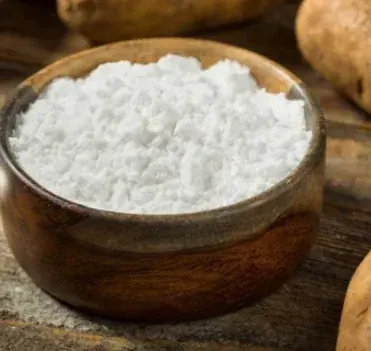
Where a formula like SlimTide honestly fits
SlimTide declares 211 mg chicory root inulin, 100 mg potato resistant starch and a 36 mg blend of Bifidobacterium infantis, Clostridium butyricum and Akkermansia muciniphila per capsule. Two things follow from reading that label rather than the marketing around it.
First, it is not one of the antibiotic-associated diarrhoea products. It does not contain S. boulardii or L. rhamnosus GG, which are the organisms the prevention evidence actually rests on, so it is not the thing to reach for on day one of a course for that purpose. Second, roughly a third of a gram of fermentable fibre a day is a seed dose rather than a bulking dose, which is a reasonable fit for the slow rebuilding phase and an unreasonable one for anybody expecting dramatic change in a fortnight.
Where it plausibly earns a place is as a consistent daily habit in weeks two onward, alongside the food changes that are doing the heavier lifting. Whether a seed dose meaningfully shifts a population is still genuinely unsettled in the literature, and we would rather write that than imply otherwise. If you are shopping around for the best gut health probiotic supplement to keep going after a course, comparing declared strains and amounts on the label will tell you more than any front-page claim will.
What this cannot do
No dietary supplement diagnoses, treats, cures or prevents any disease, and nothing here is a substitute for the antibiotic you were prescribed or a reason to alter how you take it. A probiotic does not shorten an infection, does not replace a missed dose, and is not a reason to ask for a shorter course.
There are also situations where live-organism supplements are not automatically safe. People who are severely immunocompromised, critically ill, have a central venous catheter, or have a badly damaged gut barrier have had rare but documented infections traced to probiotic organisms. That is a conversation with your own clinician, not a decision to make from a product page.
Most importantly, know the pattern that needs urgent attention rather than a supplement: watery diarrhoea many times a day, especially with fever, abdominal pain or cramping, occurring during or in the weeks after a course, can indicate C. difficile and needs medical assessment quickly. So do blood in the stool, signs of dehydration, or symptoms that are getting worse rather than better. In all of those, the risk is not the capsule — it is the days lost trying capsules first.
Questions people actually ask
When should I start taking a probiotic after antibiotics?
Most trial protocols start on the same day the antibiotic starts rather than waiting until the course is finished, because the disruption begins with the first doses. If you are starting late, starting late is still better than not starting, and continuing for two to four weeks after the last antibiotic dose is the common approach.
How long does the gut take to recover after antibiotics?
For most healthy adults the bulk of the recovery happens over roughly one to two months, with the community moving back toward something close to its previous state. Some individual species take considerably longer to return and a few may not come back at all, and repeated or broad-spectrum courses tend to extend the timeline.
Should I take a probiotic at the same time as the antibiotic?
Separate them by about two hours. Taking a live-culture supplement in the same mouthful as the drug that is designed to kill bacteria wastes most of the dose. The exception is yeast-based products such as Saccharomyces boulardii, which antibacterial drugs do not affect, though the two-hour habit is simpler to remember for everything.
Can food do the job instead of a supplement?
For rebuilding diversity, food is doing the heavier lifting. A varied range of plant fibres feeds the bacteria you are trying to bring back, and fermented foods add live organisms in amounts a capsule struggles to match. A supplement is a reasonable addition to that, not a replacement for it.
References
- NIDDK (NIH) — digestive infections, diarrhoea and when to seek care
- Mayo Clinic — C. difficile infection after antibiotic use: symptoms and risk factors
- Harvard T.H. Chan School of Public Health — diet, fibre and the gut microbiome
- PubMed — meta-analyses of probiotics for antibiotic-associated diarrhoea
- PubMed — studies of gut microbiota recovery and recolonisation after antibiotics
General information, not medical advice. These statements have not been evaluated by the Food and Drug Administration, and no dietary supplement is intended to diagnose, treat, cure or prevent any disease. Speak to a qualified healthcare professional before changing what you take.
See the Official SlimTide Store
Affiliate link. Slimtaide Review Desk earns a commission on purchases made through it, at no extra cost to you. We are not the manufacturer.