Refrigerate After Opening — Why Probiotic Labels Say It
Quick Answer: Does It Really Matter?
Yes, more than most people assume. A probiotic is not a chemical, it is a population of living organisms, and living organisms die. Heat, moisture and oxygen all accelerate that. Refrigeration slows it down. A bottle that spends three months on a warm windowsill is a measurably weaker product by the end of it than the same bottle kept cold — even though it looks identical.
- The enemy is heat and humidity, in that order.
- The bathroom cabinet is the worst shelf in the house — hot, steamy, twice a day.
- Nothing goes dangerous; it just goes weaker.
What is actually in the capsule
A probiotic capsule contains bacteria that have been freeze-dried into a dormant state. Dormant is not dead: the cells are intact and waiting for water. When you swallow them and they rehydrate in the gut, some fraction wakes up and gets on with living. That fraction is the only part that does anything, and it shrinks over time no matter how the bottle is stored. Manufacturers account for this by overfilling at the point of manufacture, which is why a label may promise a count “at time of manufacture” rather than at the date you open it.
Why heat is the main problem
Freeze-dried cells degrade faster as temperature rises. The relationship is not linear and it is not gentle — the difference between a cupboard at 20 °C and a car glovebox in August is not a rounding error. This is why shipments of some probiotic products travel with cold packs, and why the instruction to refrigerate appears at all. It is not a marketing flourish. It is the manufacturer telling you that their stability data assumes a fridge.
Why humidity is the quiet one
Moisture is arguably worse than heat, because it partially rehydrates the cells without giving them anything to live on. A little water is enough to nudge dormant bacteria into metabolic activity in an environment with no food, which they do not survive. This is the reason a desiccant sachet sits in so many probiotic bottles, and the reason you should leave it in there rather than throwing it away with the safety seal.
The bathroom cabinet problem
Almost everybody stores supplements in the bathroom, because that is where the morning routine happens. It is the single worst location in the house for a live-culture product: twice a day the room fills with hot steam, the cabinet warms, and moisture gets into everything on the shelf. If you take nothing else from this article, move the bottle to the fridge door or, failing that, to a cool dark cupboard in a room that never steams up.
What about the capsules you have already left out?
They are not dangerous. Nothing turns toxic. What you have is a product with fewer viable organisms than the label assumed, which means the prebiotic fibre in the formula is still doing its job and the probiotic half is doing less of its own. If you have been storing a bottle warm for weeks, the honest read is that your trial of the product has been running at reduced strength — which is worth knowing before you conclude the formula does not work for you.
Practical storage rules
- Fridge door, not the back of the fridge. The door is cold enough and avoids any risk of freezing, which is its own stressor for some strains.
- Leave the desiccant in the bottle and close the cap firmly every time.
- Do not decant into a weekly pill organiser for a fortnight at a time. Those are open to the air, kept at room temperature, and usually sit in — yes — the bathroom.
- Travelling? A few days at room temperature is a normal, accepted compromise. It is sustained warmth over weeks that does the damage.
- Check the label for the specific wording. Some formulations are shelf-stable by design; others say refrigerate after opening. Follow the one you actually bought.
The part that is easy to miss
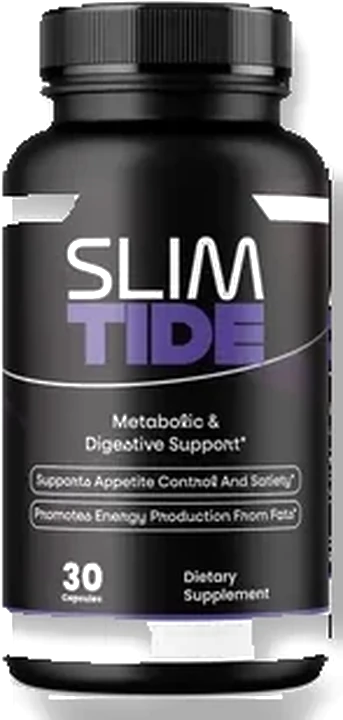
Storage instructions are usually printed on the back of the bottle in the smallest type on the label, well away from the directions for use. People read “take one capsule daily” on the front and never turn it over. If a formula pairs live strains with prebiotic fibre — as the SlimTide formula does, with 211 mg of chicory inulin and 100 mg of potato resistant starch alongside its three strains — then the fibre half is completely stable and the live half is not. Only one of the two needs the fridge, but it is the half people paid the premium for.
Common questions
Does the fridge extend the expiry date?
No. The printed date stands. Refrigeration protects the potency the label assumes up to that date; it does not buy you extra months beyond it.
Is it ruined if it froze?
Not necessarily, but freeze-thaw cycles are a stressor for some strains. A one-off accident is unlikely to destroy a bottle. Repeatedly freezing and thawing it is worth avoiding.
What if the label does not mention refrigeration?
Then follow the label you have. Some products are formulated and packaged to be shelf-stable. Adding a fridge step to those does no harm, but it is not required.
General information, not medical advice. These statements have not been evaluated by the Food and Drug Administration, and no dietary supplement is intended to diagnose, treat, cure or prevent any disease. Speak to a qualified healthcare professional before changing what you take.
See the official SlimTide offer
Affiliate link. Slimtaide Review Desk earns a commission on purchases made through it, at no extra cost to you. We are not the manufacturer.