Gut Health Supplements for Lactose Intolerance: A Careful Reintroduction Plan
Quick Answer: Do Gut Health Supplements for Lactose Intolerance Actually Help?
Two different things are being sold under that heading and only one of them acts on the meal in front of you. A lactase enzyme supplement supplies the enzyme your small intestine is short of, taken with the first bite, and the evidence that it reduces symptoms after a lactose load is reasonably solid. Probiotics and prebiotics play a slower, indirect game — changing how the bacteria in your colon deal with the lactose that gets past you — and the trial results there are genuinely mixed.
- Lactase tablets are a same-meal tool. Taken with food, not an hour before, and dosed to the size of the serving.
- Probiotics are a background tool. Weeks, not minutes, and the strain matters more than the total count.
- Most people can rebuild some tolerance by reintroducing small amounts with meals rather than avoiding dairy entirely.
What lactose intolerance actually is
Lactose is the sugar in milk, and it is too large to be absorbed whole. Splitting it into glucose and galactose is the job of lactase, an enzyme produced at the brush border of the small intestine. Almost every human makes plenty of it as a nursing infant. In most of the world's adults, production falls away after weaning — a normal genetic pattern called lactase non-persistence, not a disease and not a defect. The populations that keep making lactase into adulthood are, historically speaking, the exception rather than the rule.
When lactose is not split, it carries on into the colon, where it does two things. It draws water in osmotically, and it is fermented by bacteria into gas and short-chain fatty acids. That is the whole mechanism behind the bloating, cramping, wind and loose stools that follow a large glass of milk. Note what it is not: it is not an immune reaction, and it does not damage the gut lining.
The distinction that trips people up is between malabsorption and intolerance. Malabsorption is the physiology — lactose reaching your colon. Intolerance is the symptoms. Plenty of people malabsorb lactose and feel nothing, which is why a positive breath test does not automatically mean dairy is your problem, and why a careful reintroduction is worth doing rather than assuming a lifetime ban.
Three conditions that all get called “a dairy problem”
Getting this right decides whether any supplement is even relevant. Lactose intolerance is a sugar-digestion issue and responds to enzymes and dose control. Cow's milk protein allergy is an immune response to casein or whey, it can be serious, and no enzyme touches it — a lactase tablet will not make an allergy safe, and treating one as the other is dangerous. Then there is the large middle group who react to dairy for reasons that are neither: the fat content of a heavy cream sauce, the volume of a milkshake drunk on an empty stomach, or a general sensitivity that shows up with several foods rather than one.
If your reaction includes hives, lip or throat swelling, wheezing, vomiting shortly after a small amount, or anything resembling anaphylaxis, stop reading about supplements and get formally assessed. That is allergy territory and it needs a clinician, not a capsule.
What the evidence shows for each option
Exogenous lactase — the β-galactosidase in tablets and drops — has the most direct case. Trials generally show reduced hydrogen production and fewer symptoms when the enzyme is taken with a lactose challenge, and the mechanism is not in dispute: you are supplying the missing tool at the point it is needed. The caveats are practical. Products vary a lot in activity units, the enzyme has to meet the food rather than arrive after it, and it is dose-dependent, so the tablet that handles a splash of milk in coffee will not carry a bowl of ice cream.
Probiotics are murkier and worth being straight about. Some strains carry their own β-galactosidase activity, which is the accepted explanation for why yogurt with live cultures is better tolerated than the same amount of lactose in milk. Extending that to a capsule is where the evidence thins: results across trials are inconsistent, the effect sizes are modest where they exist, and they are strain-specific rather than a property of probiotics in general. Anyone presenting the yogurt finding as proof that any probiotic will fix lactose intolerance is overreaching.

Where a daily prebiotic and probiotic capsule fits
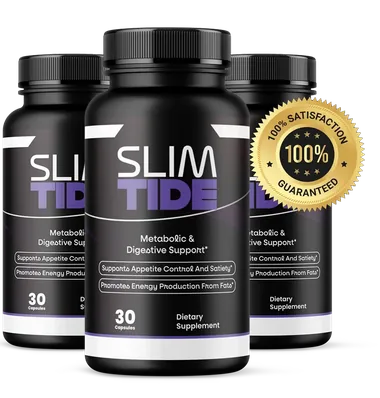
SlimTide is a once-daily capsule combining chicory root inulin, potato resistant starch and a three-strain probiotic blend, in a vegetarian hypromellose shell with no dairy carrier. If you are comparing options for the best gut health daily supplement, or you simply want to see where to buy it without working through half a dozen storefronts, the official page carries the current label and pricing.
| Option | What it does | Typical amount | When to take it | Evidence strength |
|---|---|---|---|---|
| Lactase tablets or drops | Supplies the missing enzyme to split lactose in the small intestine | Commonly 3,000–9,000 FCC units per serving of dairy | With the first mouthful | Reasonably strong for symptom reduction |
| Yogurt with live cultures | Cultures carry their own lactase activity; thicker texture slows delivery | A standard pot | As part of a meal | Strong and long established |
| Aged hard cheese | Most lactose is removed during production and ageing | A normal portion | Any time | Strong |
| Lactose-free milk | Lactose already split during processing | As you would use milk | Any time | Strong — it sidesteps the problem entirely |
| Gradual lactose reintroduction | May shift colonic bacteria toward handling lactose better | Small amounts, daily, built up over weeks | With meals | Moderate; effects are real but modest |
| Prebiotic GOS | Feeds lactose-metabolising bacteria in the colon | Several grams daily in trials | Daily, for weeks | Promising but limited |
| General probiotic capsule | Alters colonic populations; some strains carry enzyme activity | Per label | Daily, for weeks | Mixed and strain-dependent |
A lactase tablet answers the question “can I eat this tonight?” A prebiotic answers a different question entirely: “what is my colon going to be like in three months?” Buying one while expecting the other is the most common mistake in this category.
An eight-week ladder for putting dairy back
The principle is dose, matrix and company. Small amounts, in a fat- or protein-rich form, eaten alongside other food. Do not climb a rung until the current one has been comfortable for the full week, and do not climb two at once.
- Weeks 1–2 — the free rungs. Aged hard cheese and butter. Both are close to lactose-free, so this stage is mostly about proving to yourself that “dairy” is not one thing. If these cause trouble, lactose is probably not your issue and the plan should stop here pending advice.
- Weeks 3–4 — live cultures. Half a pot of plain yogurt with live cultures, with a meal, daily. Then a full pot. This is the rung most people clear comfortably, and it is doing double duty as a small daily lactose exposure.
- Weeks 5–6 — small liquid doses. Roughly a splash of milk, around 50 ml, in a hot drink taken with food. Never on an empty stomach, which is the single fastest way to fail a rung you would otherwise have passed. Build toward 100 ml.
- Weeks 7–8 — find the ceiling. Work toward a normal serving, split across the day rather than taken in one go. Somewhere in here you will find your limit. Note it and stay just under it.
- Throughout: keep everything else stable. Same supplements, same daily routine. A ladder climbed while three other things are changing tells you nothing.
Score each day the way you would in any structured self-test — a simple 0–5 for bloating, wind and stool form. Our guide to running a two-week bloating and food diary has the six-column format, and it works just as well for a reintroduction ladder as it does for an elimination.
Why gradual exposure can move the ceiling
Here is the genuinely interesting part. Your small intestine will not start making more lactase because you drank milk — that switch is genetic and it does not flip back. But the colon is a different story. The bacteria there adapt to what regularly arrives, and when lactose shows up daily, the populations that can ferment it efficiently tend to expand. Efficient fermentation produces less gas and less osmotic disturbance than the inefficient kind, so the same dose of lactose can cause fewer symptoms after a few weeks of consistent, small exposure.
That is the honest mechanism behind “keep eating a little dairy rather than cutting it out”. It is supported by controlled work on colonic adaptation, including studies feeding galacto-oligosaccharides, which are structurally close to lactose. It is also the reason that total avoidance can be self-defeating: the longer the colon goes without lactose, the less equipped it is for the birthday cake you eventually eat.
Two caveats keep this honest. The effect is modest — it moves the ceiling, it does not remove it. And it is not universal, which is why the ladder above has you finding your own limit rather than assuming you will reach any particular rung.
Being straight about what SlimTide does and does not contain
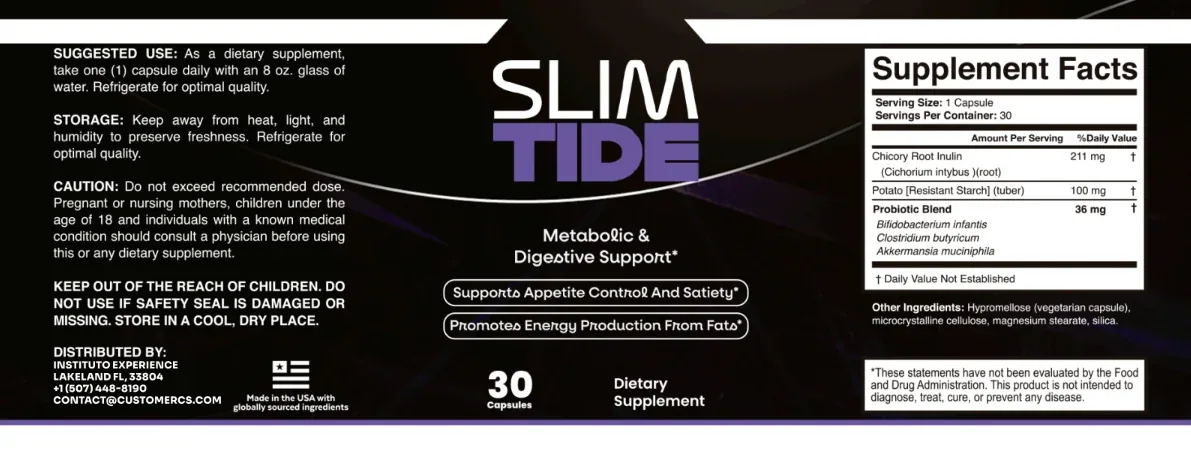
Since this site covers one product, it would be dishonest to imply it solves this. SlimTide declares 211 mg chicory root inulin, 100 mg potato resistant starch and a 36 mg blend of Bifidobacterium infantis, Clostridium butyricum and Akkermansia muciniphila per capsule, in a hypromellose shell. There is no lactase in it. It will not split the lactose in your latte, and nobody should buy it expecting that.
What it is doing sits on the slower side of the table above: a small daily fermentable substrate aimed at the colon, and a strain blend chosen for the microbiome rather than for dairy digestion. Whether that translates into better lactose handling for any individual is not something the published evidence lets anyone promise, and we would rather say so. It is also worth noting for anyone avoiding dairy entirely that the capsule itself is dairy-free and vegetarian, which matters more than it sounds when you are reading labels carefully. People searching for the best gut health supplement for weight loss often land on formulas like this one for entirely different reasons; the lactose question is simply not what it is built for.
What this cannot do
No dietary supplement diagnoses, treats, cures or prevents any disease, and nothing here restores lactase production in the small intestine. Lactase non-persistence is genetic and permanent. Enzyme supplements manage a meal; they do not change your physiology.
An enzyme also cannot help with anything that is not lactose. If your symptoms come from a milk protein allergy, from coeliac disease, from inflammatory bowel disease, or from a temporary loss of lactase after a gut infection, the lactase tablet is beside the point and may delay a diagnosis that matters. Symptoms that started suddenly, that come with blood in the stool, fever, unexplained weight loss, night-time waking or persistent vomiting are reasons to see a doctor, not reasons to try a different capsule. And if you have been avoiding dairy for years, calcium and vitamin D intake deserve a proper look with a dietitian — that gap is a real consequence of long avoidance and it is more likely to matter than the bloating that started it.
Questions people actually ask
Will a probiotic capsule digest lactose for me?
Not the way a lactase tablet does. A lactase supplement supplies the enzyme itself and acts on the meal you take it with. A probiotic works indirectly and slowly, by changing which bacteria are in the colon and how they handle undigested lactose, so it is a background strategy rather than a same-meal fix.
How much dairy can most people with lactose intolerance handle?
More than most people expect. Research on lactose malabsorption consistently finds that many adults tolerate roughly the amount of lactose in one cup of milk when it is eaten with other food and spread across the day. Tolerance is very individual, so the amount you can handle is something you establish by testing, not by reading.
Is yogurt easier to handle than milk?
For most people with lactose intolerance, yes. Live cultures in yogurt carry their own lactase activity that keeps working in the gut, and the thicker texture slows stomach emptying so the lactose arrives more gradually. Aged hard cheeses are easier again, because most of the lactose is removed during production.
Do I need to take a lactase enzyme forever?
Not necessarily, and it is a meal-by-meal tool rather than a daily one. Many people find they need it only for larger dairy servings once they have rebuilt tolerance gradually. A dietitian is the right person to help you decide how far to take that, particularly if you have been avoiding dairy long enough to be short on calcium.
References
- NIDDK (NIH) — lactose intolerance: causes, diagnosis and dietary management
- Mayo Clinic — lactose intolerance symptoms, causes and testing
- Harvard T.H. Chan School of Public Health — calcium sources for people limiting dairy
- PubMed — randomised trials of lactase supplementation in lactose intolerance
- PubMed — galacto-oligosaccharides and colonic adaptation to lactose
General information, not medical advice. These statements have not been evaluated by the Food and Drug Administration, and no dietary supplement is intended to diagnose, treat, cure or prevent any disease. Speak to a qualified healthcare professional before changing what you take.
See the Official SlimTide Store
Affiliate link. Slimtaide Review Desk earns a commission on purchases made through it, at no extra cost to you. We are not the manufacturer.