Over-the-Counter Weight Loss Pills: A Buyer's Guide
Quick Answer: Do Over-the-Counter Weight Loss Pills Work?
Some over the counter weight loss pills offer modest, real support — mostly by helping appetite, fullness or fibre — but none are FDA-approved to treat obesity and none replace a calorie deficit. Expect help at the margins, not a transformation. The best ones show every dose on the label, avoid hidden stimulants, and back themselves with a guarantee.
- Not FDA-approved. OTC supplements are not reviewed for effectiveness before sale.
- Read the label first. Watch for "proprietary blends" and hidden stimulants like caffeine under other names.
- Green flags. Transparent dosing, third-party or GMP testing, and a real money-back guarantee.
What over-the-counter weight loss pills can and can't do
Let's start with the honest ceiling. Over the counter weight loss pills are not magic, and no legitimate one is going to melt fat while you sleep. What the better products can do is nudge the levers that make a calorie deficit easier to sustain: they can blunt appetite a little, help you feel full sooner, add fibre you were not getting from food, or steady the energy dips that send you toward a mid-afternoon snack. That is genuinely useful, but notice the framing — they make the diet easier to keep, they are not a substitute for it.
What they cannot do is override the arithmetic. If more calories go in than out, no capsule changes the direction of travel. They also cannot deliver the kind of results people now associate with prescription injectables; that is a different category with a different level of oversight and a different level of effect. Anyone selling an OTC pill on the promise of "drug-like" loss is either misreading the science or hoping you will. Set the expectation at "a helpful assistant," and you will choose far better than someone chasing a miracle.
Are OTC diet pills FDA approved? (No — and why that matters)
This is the single most misunderstood point in the whole aisle, so it is worth being blunt. Dietary supplements sold over the counter are not FDA-approved to treat obesity, or anything else. The agency does not review them for effectiveness before they go on sale. Manufacturers are responsible for the safety and honesty of their own products, and the FDA generally steps in only after something goes wrong. Approved weight-loss medications exist, but they are a separate, prescription-only category.
That regulatory gap is not a reason to panic, but it is a reason to shift the burden of proof onto the label. In a world where nobody vetted the claims for you, the transparency of the product becomes your best proxy for trustworthiness. A brand that shows every ingredient and every dose, tests its batches, and offers a real guarantee is behaving as if it expects scrutiny. A brand that hides behind vague blends and breathless promises is behaving as if it does not want any. You get to reward the first kind with your money.
How to read a diet pill label without getting fooled
Here is the practical skill that will save you the most money and the most disappointment. Turn the bottle around and work through the supplement facts panel line by line.
Hunt for the "proprietary blend." This is the biggest red flag in the category. A proprietary blend lists several ingredients together under one total weight, so you never learn how much of each you are actually getting. It sounds premium; it usually means the exciting-sounding ingredient is present in a token sprinkle while the cheap filler makes up the bulk. If a label will not tell you the dose of each ingredient, treat that as the product declining to answer the only question that matters.
Check for hidden stimulants. A lot of the "energy" and "thermogenic" feeling in diet pills is just caffeine, sometimes stacked from several sources under different names — guarana, green tea extract, yerba mate, kola nut. Add them up. A pill can quietly contain the caffeine of two or three coffees, which is fine if you know and want it, and a nasty surprise if you take it at 4pm and cannot sleep. If you are caffeine-sensitive, this single check matters more than any marketing claim on the front.
Read the serving size. The eye-catching dose on the front is sometimes spread across three or four capsules a day, which changes both the cost and how much you actually have to remember to take. And look for the housekeeping: a GMP-certified facility, third-party testing, a batch or lot number, and a clearly stated money-back guarantee. None of those prove a pill works, but together they show a company that expects you to check, which is exactly the company you want.
Want a stim-free option with nothing hidden on the label?
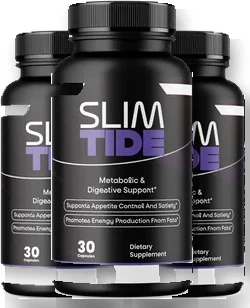
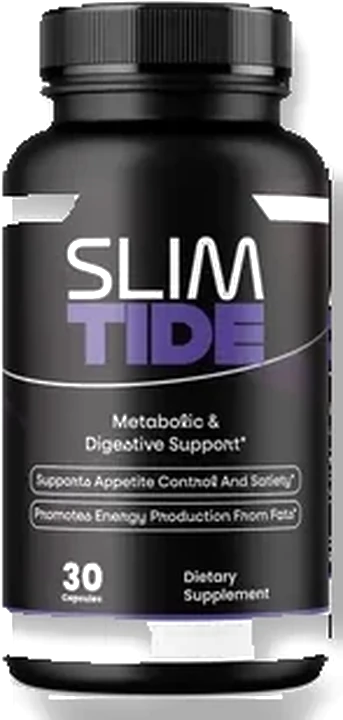
SlimTide is built the way this guide recommends buying: no proprietary blend, no caffeine or hidden stimulants, fully disclosed prebiotic fibre and named bacterial strains, made in a GMP facility, and backed by a money-back guarantee. If a transparent, stimulant-free daily capsule is what you are actually looking for, you can check the current price and read the full label on the official page.
The main types of OTC pill, and what each is really doing
Most of the aisle sorts into a handful of mechanisms once you strip away the branding. Knowing which bucket a product is in tells you what to expect from it.
| Type | How it aims to help | Watch out for | Best for |
|---|---|---|---|
| Stimulant "fat burners" | Caffeine-driven energy and appetite blunting | Jitters, poor sleep, stacked caffeine sources | People who tolerate stimulants well |
| Fibre / prebiotic | Fullness and appetite support; feeds gut bacteria | Introduce slowly to avoid gas or bloating | Snackers and the caffeine-sensitive |
| Appetite suppressants | Reduce hunger cues so a deficit is easier | Effect varies a lot person to person | People whose main struggle is hunger |
| Fat / carb "blockers" | Reduce absorption of some fat or starch | Digestive side effects; modest evidence | Occasional support, not a strategy |
| Metabolism-support strains | Bacterial strains studied in metabolic health | Support, not dramatic loss; give it weeks | Daily-habit, long-game buyers |
The front of the bottle is written by marketing. The back of the bottle is written by regulators. Buy from the back.
Three myths worth clearing up before you buy
Myth one: "Natural means safe and side-effect-free." Not necessarily. Plenty of natural stimulants raise heart rate and blood pressure, and even benign-sounding fibre can cause gas and bloating if you ramp it up too fast. Natural describes an origin, not a safety guarantee. If you want a fuller picture of what can go wrong and how to avoid it, our rundown of the most common weight loss supplement side effects is a useful companion to this page.
Myth two: "A longer ingredient list is a better formula." Usually the opposite. A label crammed with twenty-five trace ingredients is often a "label decoration" strategy — enough names to look impressive, not enough of anything to matter. A short list of well-dosed, clearly named ingredients almost always beats a long list of fairy dust.
Myth three: "If it were useless, it wouldn't be allowed on the shelf." As we covered above, being on the shelf means it was manufactured and labelled to the rules, not that anyone proved it works. The shelf is not a stamp of effectiveness. Your own reading of the label is closer to one than the store's decision to stock it.

Where SlimTide fits as a stim-free choice
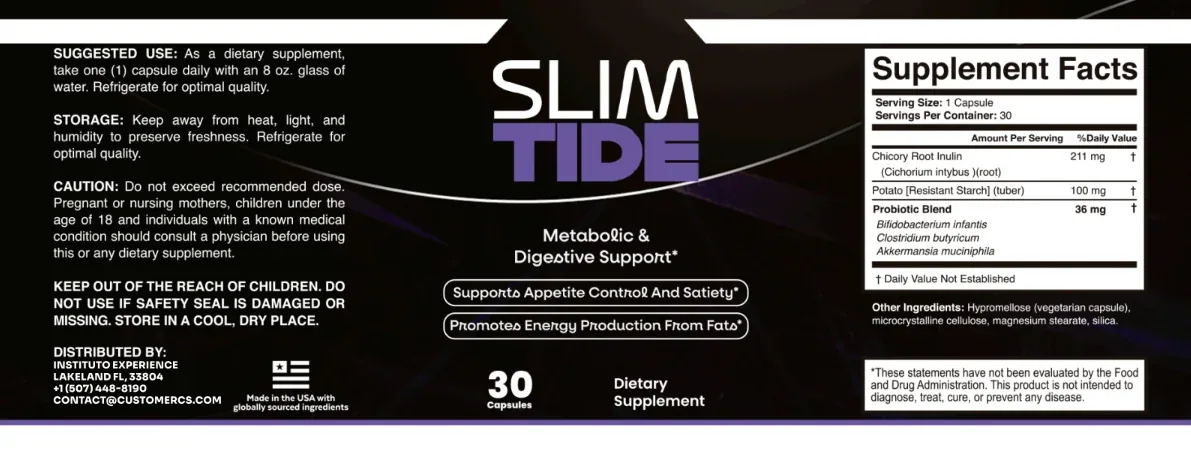
Applying this guide's own checklist to SlimTide is a fair way to show how it should be used on any product. On the label question, it passes: the fibre — chicory root inulin and potato resistant starch — is disclosed with amounts rather than buried in a blend, and the bacterial strains are named individually, including Akkermansia muciniphila, which shows up repeatedly in metabolic-health research. On the stimulant question, it is deliberately stim-free: no caffeine, no thermogenic tricks, nothing that leaves you wired at bedtime. On the housekeeping, it is made in a GMP facility and carries a money-back guarantee, which is the risk-reversal you should insist on from anything in this category.
What it is honestly is a support product, not a shortcut. The prebiotic fibre is there to help appetite and fullness, which is the lever most dieters actually lose to, and the strains lean toward the slow, metabolic-support end of the spectrum rather than a dramatic overnight effect. That makes it a natural fit for the caffeine-sensitive, for people who tried a stimulant fat-burner and hated the crash, and for anyone who would rather build a boring daily habit than ride a rollercoaster. If you are still comparing options, our roundup of the best weight loss pills of 2026 compared places it against the wider field.
A sensible way to shop, in five steps
Pulling it together, here is the whole process compressed. First, decide which lever you actually need help with — appetite, fibre, energy — because that narrows the category before you read a single label. Second, turn the bottle around and reject anything hiding doses in a proprietary blend. Third, add up the stimulants and make sure the total matches what you want. Fourth, insist on GMP or third-party testing and a genuine guarantee, so the downside is capped. Fifth, give whatever you choose a fair run of eight to twelve weeks alongside the diet and movement doing the real work — then judge it honestly and stop if it earned nothing. Do that, and you will out-shop most of the market without needing a single miracle claim to be true.
Questions people actually ask
Do over-the-counter weight loss pills work?
Some can offer modest, real support — usually by helping with appetite, fullness or fibre intake — but none replace a calorie deficit and none produce drug-level results. Treat any OTC pill as a small assist on top of diet and movement, not the main event. The honest expectation is help at the margins, and only for products with sensible, transparent ingredients.
Are OTC diet pills FDA approved?
No. Dietary supplements sold over the counter are not FDA-approved to treat obesity or any condition. The FDA does not review them for effectiveness before sale, and manufacturers are responsible for their own safety and labelling. Approved weight-loss drugs are a separate, prescription category. That is exactly why label transparency and third-party testing matter so much for OTC products.
What should I look for on a diet pill label?
Look for fully disclosed ingredients with the amount of each one listed, rather than a 'proprietary blend' that hides the doses. Check for hidden stimulants such as caffeine under other names, a clear serving size, third-party or GMP testing, and a genuine money-back guarantee. Fewer, well-dosed, clearly named ingredients beat a long list of trace amounts.
Which OTC weight loss pill is stimulant-free?
SlimTide is a stimulant-free option: it contains no caffeine or added stimulants and instead uses prebiotic fibre to support appetite and fullness alongside metabolism-linked bacterial strains. Stim-free formulas suit people who are sensitive to caffeine, take it late in the day, or simply want to avoid the jitter-and-crash cycle common to stimulant diet pills.
References
General information, not medical advice. These statements have not been evaluated by the Food and Drug Administration, and no dietary supplement is intended to diagnose, treat, cure or prevent any disease. Speak to a qualified healthcare professional before starting any supplement, especially if you take medication or have a health condition.
See the Official SlimTide Store
Affiliate link. Slimtaide Review Desk earns a commission on purchases made through it, at no extra cost to you. We are not the manufacturer.