SlimTide vs Berberine for Weight Loss: Nature's Ozempic?
Quick Answer: Is Berberine Really Nature's Ozempic?
No. The label is clever marketing, not pharmacology. Berberine for weight loss shows a small signal — roughly five to ten pounds over eight weeks in weak studies — while Ozempic averages around fifteen percent of body weight under medical care. Berberine also frequently upsets the gut. SlimTide takes a broader, stimulant-free route instead.
- The evidence is thin. Small samples, short durations and inconsistent methods (Mayo Clinic and TIME have both flagged this).
- Diarrhoea is common. Digestive upset is the single most reported berberine complaint.
- Different job. SlimTide pairs prebiotic fibre for appetite with metabolism-linked strains, not one isolated molecule.

Where the "nature's Ozempic" nickname came from
In 2023 a wave of short-form videos rebranded an old herbal compound as a shortcut to the results people were seeing with GLP-1 drugs. Almost overnight, searches for berberine for weight loss exploded — the term now draws something in the order of forty thousand searches a month and is still climbing as a rising query. The pitch was irresistible: why pay for an injectable and a prescription when a plant alkaloid you can buy over the counter supposedly does the same thing for a fraction of the cost?
Berberine itself is real and genuinely interesting. It is a yellow compound found in plants such as goldenseal, barberry and Oregon grape, and it has centuries of use in traditional medicine. Modern research has looked at it mostly for blood sugar and cholesterol, where the data is more encouraging than it is for the scale. The problem is not that berberine is fake. The problem is the gap between what the laboratory work suggests and what a fifteen-second clip promised.
Whenever a supplement gets a nickname borrowed from a prescription drug, that nickname is doing marketing work, not scientific work. It borrows the credibility and the results of the drug and quietly attaches them to something that has never been tested to the same standard. That is exactly what happened here, and it is worth pulling the two apart carefully before you spend anything.
Does berberine for weight loss actually work?
There is a signal. It is just much smaller and shakier than the hype implies. The trials that get quoted tend to report somewhere between five and ten pounds of loss over roughly eight weeks — and even that comes with heavy caveats. Sample sizes are frequently tiny, sometimes only a few dozen people. Study durations are short, so nobody knows whether an effect at eight weeks holds at eight months. Many of the participants had metabolic conditions such as insulin resistance or fatty liver, which makes it hard to know whether a healthy person chasing the last ten pounds would see anything at all.
Mainstream reviewers have been unusually blunt about this. Reporting from outlets including TIME, and clinician commentary summarised by the Mayo Clinic, has repeatedly landed on the same verdict: the studies are small, short and methodologically weak, and the excitement has run well ahead of the proof. That is not a fringe opinion. It is the consensus among the people whose job is to read the trials rather than sell the capsules.
None of this means berberine does nothing. It means the honest framing is modest: a possible small aid for some people, most plausibly through effects on blood sugar and how the body handles carbohydrates, and almost always in the context of a diet change that was doing the real work. If a product can only claim a few pounds in the best-case studies, it deserves to be described that way rather than dressed up as an injectable in a bottle.
The side effect nobody puts in the caption
Here is the part the viral clips skip. The most common thing berberine actually does to people is upset their digestion. Diarrhoea, cramping, constipation, gas and nausea are all frequently reported, and they are common enough that the standard advice is to split the dose into two or three servings taken with food to make it tolerable at all. For a compound sold on the promise of a flatter stomach, spending your first two weeks running to the bathroom is an awkward contradiction.
There is a more serious layer too. Berberine can lower blood sugar, which is part of why it is studied at all, but that also means it can stack with diabetes medication in ways that need supervision. It interacts with a range of prescription drugs, including some cleared through the same liver enzymes as common medications, and it is not considered safe in pregnancy. This is genuinely a "talk to your clinician first" compound, not a casual grab off the shelf.
Prefer support that doesn't start with a stomach ache?
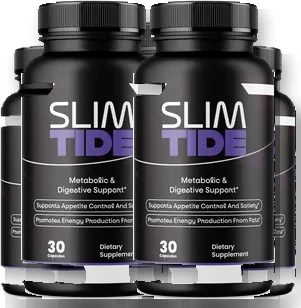
SlimTide takes the opposite approach to a single harsh alkaloid. It is a once-daily, stimulant-free capsule that pairs prebiotic fibre — which supports fullness and steadier appetite — with bacterial strains studied in metabolic health. If you would rather build a daily habit than gamble on a compound famous for GI upset, it is worth checking the current price and full label on the official page.
Berberine vs Ozempic: not the same league
This is where the nickname collapses completely. Semaglutide, the drug behind Ozempic and Wegovy, is a GLP-1 receptor agonist. It mimics a gut hormone that governs appetite and how quickly the stomach empties, and in large, long, tightly controlled trials it produces average losses in the region of fifteen percent of body weight. That is a transformational effect, achieved under prescription, with a known side-effect profile and medical oversight.
Berberine touches some overlapping downstream machinery — it is often described as activating an energy-sensing pathway called AMPK — but it is not a GLP-1 drug, it does not act on the same receptor, and it has never come close to matching those numbers in a study built to the same standard. Comparing a possible five to ten pounds in a tiny eight-week trial to fifteen percent of body weight in a multi-thousand-person program is not a fair fight. It is two different categories of intervention wearing the same T-shirt.
| Approach | What it is | Typical reported effect | Main drawback | Evidence strength |
|---|---|---|---|---|
| Berberine | Single plant alkaloid, over the counter | ~5–10 lb over ~8 weeks in weak studies | Frequent GI upset; drug interactions | Weak — small, short trials |
| Semaglutide (Ozempic) | Prescription GLP-1 receptor agonist | ~15% of body weight over months | Prescription only; cost; side effects | Strong — large controlled trials |
| SlimTide | Stim-free prebiotic-fibre + strain formula | Daily appetite and metabolic support | Support, not a drug-level effect | Mechanistic; individual results vary |
Any supplement that borrows a prescription drug's nickname is quietly borrowing results it was never tested to produce. Read the trials, not the T-shirt.
Three myths about berberine, examined
Myth one: "It's natural, so it's gentle." Natural and gentle are not the same word. Berberine is a potent, pharmacologically active alkaloid — that is precisely why it is being studied — and its most common real-world effect is digestive disruption. Potency cuts both ways.
Myth two: "It works like the injectable, just slower." Slower is not the issue; different is. As above, it does not act on the GLP-1 receptor and does not reach comparable losses. A smaller version of a completely different mechanism is not a slower version of the same one.
Myth three: "More is better, so I'll double the dose." With berberine, a larger single dose tends to buy more diarrhoea, not more results, which is why studies split it across the day. Chasing the number on the scale by escalating a compound famous for GI side effects is how people quit in week two.
Addressing these honestly matters because the alternative — letting the hype stand — sets people up to feel like failures when a viral shortcut does what viral shortcuts usually do. If you want the wider view on what over-the-counter options can and cannot deliver, our guide to over-the-counter weight loss pills lays out the whole category, and our practical framework for choosing diet supplements for weight loss shows how to match an ingredient to your actual goal.

Where SlimTide fits — and where it honestly doesn't
SlimTide is not trying to be a berberine clone or an injectable substitute, and it is fairer to everyone to say so. It is a once-daily, stimulant-free capsule built around a different logic. Rather than one isolated alkaloid pushed hard at a single pathway, it pairs prebiotic fibre — chicory root inulin and potato resistant starch — with a small blend of bacterial strains, including Akkermansia muciniphila, that turn up repeatedly in the metabolic-health literature.
The practical difference is where the effect shows up. Fibre supports fullness and steadier appetite, which is the lever most people actually struggle with day to day, and it does so without the stimulant jitter that powers a lot of the diet-pill aisle. There is no caffeine to spike and crash, and no single harsh compound to titrate around your bathroom schedule. It is designed to be a boring daily habit, which is usually what sticks.
Where it does not compete is at the drug end of the scale. SlimTide offers support, not a fifteen-percent transformation, and anyone who tells you a fibre-and-strain capsule matches an injectable is making the same mistake the berberine crowd made. Its honest position is a stim-free everyday aid to appetite and metabolic support, sitting alongside a calorie deficit rather than replacing it. If you want to see how it stacks up against the wider field, our roundup of the best weight loss pills of 2026 compared puts it in context.
So which should you choose?
If your interest in berberine is really about blood sugar and lipids, that is the conversation to have with a clinician, because that is where its evidence is least weak — and where its interactions matter most. If your interest is genuinely weight, be honest with yourself that the best-case data is a handful of pounds bought at the price of frequent digestive upset. If what you actually want is steadier appetite and a stimulant-free daily habit you can keep, a broader formula is the more comfortable fit. Whatever you pick, the deficit is still the engine; everything here is, at most, a passenger that makes the drive easier.
Questions people actually ask
Is berberine really nature's Ozempic?
The nickname is marketing, not pharmacology. Berberine and the drug semaglutide (Ozempic) act through different mechanisms, and the effect sizes are not in the same league: trials of berberine report roughly five to ten pounds over about eight weeks, while semaglutide trials report around fifteen percent of body weight over a much longer period under medical supervision. Calling berberine 'nature's Ozempic' overstates what the evidence actually shows.
Does berberine work for weight loss?
There is a signal, but it is modest and the studies are small, short and methodologically weak. Reviews commonly point to a few pounds over eight to twelve weeks, often in people who also changed diet or had metabolic conditions. It is fairer to describe berberine as a possible small aid alongside a calorie deficit than as a reliable weight-loss agent.
What are berberine's side effects?
Digestive upset is the most common complaint: diarrhoea, cramping, constipation, gas and nausea, which is why berberine is usually split into two or three doses with food. It can also lower blood sugar and interacts with several medications, including some processed by the liver, so anyone on prescription drugs should speak to a clinician first.
Is SlimTide better than berberine?
They are built for different jobs, so 'better' depends on your goal. Berberine is a single compound aimed mainly at glucose and lipid pathways. SlimTide is a stimulant-free formula that pairs prebiotic fibre for appetite and fullness with metabolism-linked bacterial strains, so it leans toward daily appetite and metabolic support rather than a single molecular target. Neither replaces a calorie deficit.
References
General information, not medical advice. These statements have not been evaluated by the Food and Drug Administration, and no dietary supplement is intended to diagnose, treat, cure or prevent any disease. Speak to a qualified healthcare professional before starting any supplement, especially if you take medication or have a health condition.
See the Official SlimTide Store
Affiliate link. Slimtaide Review Desk earns a commission on purchases made through it, at no extra cost to you. We are not the manufacturer.